Recently, I was chatting with several friends who are doing community projects, and I found that everyone is currently busy with the New Era Civilization Practice Center. Speaking of which, there are more and more such places now, and they can be seen in the streets and communities. Since it is a center, it must have a facade, right? Signage has become the first problem to be solved, but many people may not realize that making signage is no longer an era where just drawing a floor plan can be done. 3D rendering design , in this link, it can simply play the role of "one picture determines the world".
.jpg "新时代文明实践中心标牌,3D图设计到底有多重要?看完这篇你就懂了!")
Why do you say that? Let me first talk about an actual situation I encountered. Last month, a person in charge of a street came to me for consultation and said that their center had been renovated and signs had been made. However, when I put them up, I always felt that something was wrong - the color clashed with the exterior wall of the building, the size and proportion looked a bit awkward from a distance, and it was even more difficult to read the words when the lights were on at night. In fact, these problems can be solved if there is a picture before production. Detailed 3D renderings , can be avoided with a high probability. The graphic design drawing is two-dimensional, and it is difficult to truly restore the three-dimensional effect, material texture, and visual presentation of the sign in the actual environment at different times and under different lights. This is like looking at flat photos when buying clothes without trying them on. It is easy to cause the embarrassment of "buyer's show" and "seller's show".
What should a qualified 3D map of the signage of the New Era Civilization Practice Center reflect? I think the core is “"Integration" and "Convey"” .
.jpg "新时代文明实践中心标牌,3D图设计到底有多重要?看完这篇你就懂了!")
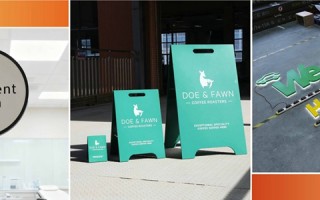
Environmental integration , the 3D drawing does not show a beautiful sign model in isolation, it must "place" the sign back into the actual installation environment. Is the background a brick wall, a glass curtain wall or a marble column? Are there any trees around for cover? What is the structure of the door head? Only by modeling these elements can we intuitively judge the color of the sign (whether it is too bold or too boring), size (whether it is too stingy or too obtrusive), and installation location (whether the height and angle are appropriate). In particular, the new era practice center often relies on existing community buildings, and the environment is often complex, and it is necessary to preview the effect through 3D simulation.
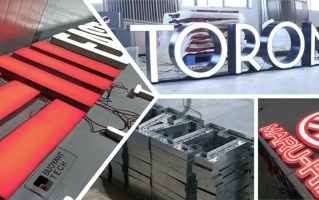
Preview of materials and craftsmanship For the signage of the New Era Practice Center, the material selection usually needs to take into account solemnity, people-friendliness and durability. It may be metal paint, acrylic, stainless steel etching, or combined with LED luminous characters. These materials can be rendered in a computer through 3D software to highly simulate the real texture, the reflective degree of the metal, The transparency of acrylic, the brightness and halo of luminous characters, and even the effects of afternoon sunlight in different seasons can be clearly seen. This can help decision-makers intuitively feel the final effects of different material solutions, and avoid making decisions based only on text descriptions or samples, which may lead to the actual production being "not as imagined."
.jpg "新时代文明实践中心标牌,3D图设计到底有多重要?看完这篇你就懂了!")
Visual presentation of information levels , the signage of the New Era Civilization Practice Center often contains more than one name. It may include the core logo, the full name of the center, English translation, auxiliary slogans, etc. On the floor plan, you may only be able to see the layout, but on the 3D map, you can clearly see the three-dimensional hierarchy of the information.: What content is raised and what is flat ; The visual difference brought about by the thickness and spacing of the main title and subtitle ; Which information is captured first at a distance is critical to ensuring the core function of signage - delivering information quickly and accurately.
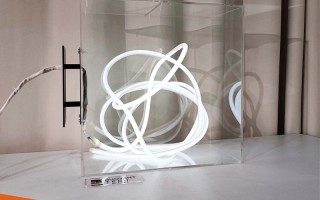
Lighting effect testing It is especially critical that many central signs need to consider the nighttime effect. 3D design can simulate the nighttime environment. How the preset LED light sources are distributed, whether the light is uniform, whether it will cause glare, and whether the color is accurate can all be debugged and optimized in advance. This is much cheaper and easier than adjusting the circuit and replacing the light source after installation.
To be honest, finding a professional designer or team to produce a 3D rendering will indeed incur some additional costs, but I think it is well worth the investment. It is essentially a Tools for low-cost trial and error and efficient communication , exposing and solving all problems at the drawing stage is far more economical than reworking and redoing after production and installation. For the street or community staff responsible for the project, reporting with realistic 3D renderings is far more intuitive and convincing than describing in abstract language, and it is easier to reach consensus.
Finally, I want to talk about style. The signage of the New Era Practice Center should be reflected in the style. Sense of the times, affinity and cultural atmosphere , 3D design has more advantages in style control. You can constantly try and approach the feeling that best suits the temperament of the center by adjusting the roundness and toughness of the model lines, the warmth and saturation of the material color, and the brightness and warmth of the lighting atmosphere. Should it be more modern and simple, or should it incorporate some traditional cultural elements? 3D images can quickly give a variety of visual answers.
The signage of the New Era Civilization Practice Center is the first contact point of the center’s image and a microscopic reflection of its spiritual outlook. Before making it, spend some thought on it. 3D rendering design This link is by no means unnecessary, but a smart way to truly "do things in advance". It changes the decision-making from "probably, possible, I think" to "visible, tangible, and well-founded." After all, a good start is often hidden in these seemingly trivial but actually critical details. Do you think this is true?