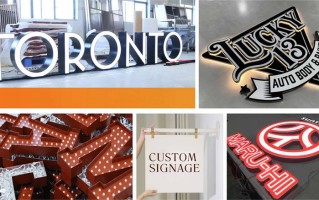
Every time you walk in a shopping mall or drive through an intersection, those clear and eye-catching signs can always guide the direction just right. Have you ever thought about what kind of "journey" these seemingly simple signs actually go through? Let’s not talk about those lofty design concepts, but we will get down to the factory workshop and see how a signboard turns from a few lines on the computer into a strong and beautiful physical object in front of us. This process is far more exquisite than you think, and it is more like a "slow and careful work" that requires patience and craftsmanship.
first step: To digest the drawings, you must have a "spectrum" in your mind”
.jpg "从图纸到落地,一场标识标牌制作的慢工细活")
For us producers, everything does not start with the startup of the machine. The drawings sent by the designer are our "combat map". This first and most critical step is to read the drawings. A good production master must be like an old Chinese medicine practitioner who "sees, hears, asks and understands". He must understand the drawings thoroughly. He must not only understand the size, shape, and material, but also ponder the designer's intention.: What is the visual experience of this arc? Is the structural strength of that hollow part strong enough? How to connect different materials beautifully and firmly?
At this time, experience comes in handy. An experienced master can tell at a glance which parts of the drawing are "ideal and full", but the actual production may be "very skinny". An ultra-thin metal character looks minimalist and advanced on the design drawing, but how not to deform during actual welding and how to make the surface treatment uniform are all challenges. We It is often necessary to have one or even several rounds of communication with designers to put forward feasible process optimization suggestions on the premise of respecting the original design. This process is actually to "translate" the wild ideas into engineering language that can be implemented and produced. With this "spectrum" in mind, the subsequent work will not go astray.
Step 2: Material “casting”, texture is the basis
After thoroughly understanding the drawings, the next step is "selection" - choosing materials. This is not just about buying a board in the market. More than half of the texture of the signage is determined by the material. Should you choose calm and heavy brushed stainless steel, or fashionable and light aluminum profiles? Should it be made of transparent and modern acrylic, or warm and natural solid wood? Or is it a combination of multiple materials?
We have to be as picky as chefs when choosing ingredients. They are both stainless steel. The corrosion resistance of 304 and 201 is very different. When used indoors or outdoors, the choice is completely different. The thickness and purity of acrylic directly affect the final light transmission effect and anti-aging ability. What kind of drying and anti-corrosion treatment does the wood need to undergo to avoid cracking and deformation in the future? These choices are not only related to the final visual effect, but also determine the "life" and "condition" of the sign in the next five or ten years. In order to find a log with a texture and color that meets the requirements, or an imported board with a specific thickness, we have to visit several suppliers. When it comes to materials, we really can't worry about it, and we can't be careless.
.jpg "从图纸到落地,一场标识标牌制作的慢工细活")
Step 3: The workshop "transforms" and the craftsmanship is revealed
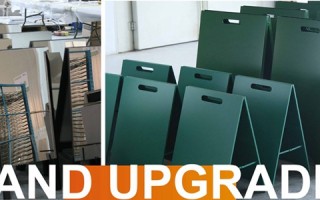
Once the materials are ready and the drawings are clear, the real "highlight" takes place in the workshop. There is no magic here, it's all about solid craftsmanship.
Blanking and cutting: This is the first step in "shaping". Laser cutting is now very common, with high precision and smooth edges. It is especially suitable for complex graphics and hollow characters. However, for thick steel plates or special materials, plasma cutting or water jets may have to be used. Listening to the roar of the machine and watching the sparks flying, the outline of the material is accurately outlined bit by bit. It feels quite wonderful.
Sheet Metal and Forming: To turn flat materials into three-dimensional characters or shapes, you have to rely on the skills of sheet metal masters. Bending, curling, welding, grinding... Every process tests the skill of the hands, especially welding. A good welder can make the joints flat and smooth, with almost no traces. This directly determines the "refinement" of the logo. Polishing is even more physical work. It requires grinding off burrs and weld scars to make the surface smooth and lay a good foundation for subsequent processing.
surface treatment: This is the link that gives the logo its "skin color" and "temperament". The metal may need to be polished, brushed, and sandblasted to obtain different textures. ; Then there is electroplating, baking paint or fluorocarbon spraying. The temperature and humidity of the paint room must be strictly controlled, and the spray painter's hands must be steady. One coat of primer, two coats of topcoat, and even varnishing are required to obtain a uniform, full and strong adhesion color. The now popular automotive metallic paint, with its layered visual effect, has extremely high requirements for the spraying process.
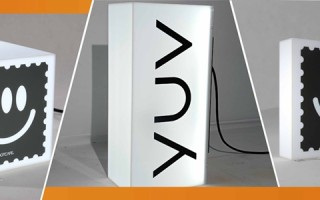
Printing and assembly: If it is a silk screen or UV printing pattern, the environment must be dust-free and the alignment must be precise. Even a millimeter difference may feel awkward. Assemble the various components - install the LED module, connect the circuit, fix the panel, and assemble the structure. The large sign may need internal reinforcement to ensure that it is stable even in windy weather outdoors. After the assembly is completed, turn on the power and test it. When the light comes on and the sign is fully presented, all the hard work will be worth it.
Step 4: Installation and debugging, the final touch”
Don't think that everything will be fine once it's done in the factory. Logo production is "seven minutes of making and three minutes of assembly". The environment at the installation site is ever-changing.: It may be a cement wall, a glass curtain wall, or soft soil. The installation team must be like a "surgical team", accurately measuring and positioning, and choosing the most reliable fixing method (expansion bolts, chemical anchors, welded embedded parts, etc.), which must be installed firmly without damaging the on-site walls or floors.
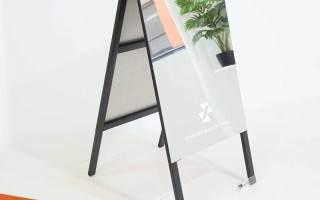
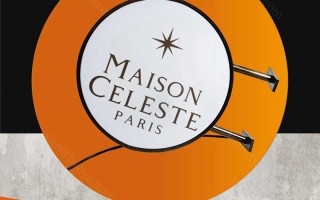
Installation is not just about hanging it up. The level, verticality, viewing angle, nighttime brightness, wind resistance...all need to be carefully adjusted, especially for illuminated signs. Will the angle and brightness of the light cause light pollution? Is the nighttime effect clear and soft? This requires repeated observation and adjustment on site, completion of installation, cleaning the site, and tearing off the protective film. Only then can a sign be truly "born" and begin to fulfill its mission.
end:
So you see, the production of a signboard is not an "assembly line fast food" at all. It is more like a "handicraft" that requires multi-party collaboration and continuous polishing. From understanding the design to the material game, from precision processing to patient debugging, every link condenses experience, craftsmanship and paranoia about details. If you work in this business for a long time, you will feel that we It’s not just making a brand, it’s more like making “silent guides” and “visual annotations” for the city and the space. Wherever they stand, they must withstand the wind and sun, withstand the scrutiny of people’s eyes, and silently maintain clarity and dignity over the years. This is probably the greatest sense of accomplishment behind this “slow and meticulous work”.