Recently I was chatting with a few friends who are engaged in municipal engineering, and they were all complaining about the current road markings and signage design.: “No matter how beautiful the drawings are, once you arrive at the scene, you always feel that it is a bit boring. Either the perspective is wrong, or it is out of touch with the actual environment. ” These words suddenly reminded me of something that has become more and more popular in the signage design circle in recent years.—— 3D design drawing , it is not a fancy show-off, but is actually changing the way we look at traffic signs.
In the past, we mostly relied on plane drawings and two-dimensional renderings for design. The designer worked hard in front of the computer. The client understood it based on imagination, and the builder implemented it based on experience. If there was a misunderstanding in the middle, the final product might be completely different from the original intention, especially road signs. Lines and large guide signs exist in a real three-dimensional space and are greatly affected by terrain, perspective, light, and surrounding buildings. An arrow that looks perfectly proportioned on a plan view may become difficult to recognize when placed at an actual intersection due to the slope of the road or the driver's perspective.
.jpg "道路标线标牌3D设计图,让交通指引从平面走向立体的魔法")
At this time, the advantages of 3D design drawings are highlighted. It is more like a “Digital sandbox” , putting markings and signs into a simulated real environment. Designers can rotate 360 degrees to simulate the visual experience at different driving speeds, and even adjust the light and shadow effects at different times of the day. Will a reflective sign produce glare under direct sunlight? Will the complicated multi-directional markings at intersections look confusing to drivers? These problems that are difficult to find in the plane stage are almost invisible in the 3D view.
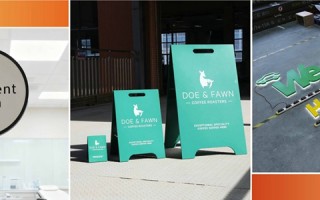
I know a studio that specializes in traffic sign design. Last year, they took on a scenic road renovation project in an ancient tourist town. The roads in the ancient town were narrow and had many forks. The traditional marking construction drawings could not always handle the contradiction between the primitive landscape and modern transportation needs. Later, they simply used 3D software to build a model of the entire street, and then copied the designed imitation Ancient wood grain signboards and colored markings on the bluestone pavement were "put in" for rendering. Customers could not only "walk" through the virtual ancient town to check the effect in advance, but also experience it from different perspectives as drivers and pedestrians. The final plan was approved in one go, and the construction team also reported that working according to the drawings was particularly intuitive and saved a lot of communication costs. In the words of their chief designer: “This is like letting you view a house in VR before decoration. All the details are clear at a glance. Not satisfied? It’s easy for us to change it, and it’s better than smashing it and redoing it. ”
.jpg "道路标线标牌3D设计图,让交通指引从平面走向立体的魔法")
Producing a reliable 3D design drawing requires more than just software technology. Accurate basic data It is the skeleton, the precise size, slope, turning radius of the road, and the location of surrounding key buildings and green belts. These must be collected accurately so that the model can be built realistically and the designer must understand Materials and workmanship , you design a cantilevered sign with a 3D effect. The thickness of the metal structure in the picture, the support method, and the grade of reflective film used must all comply with the actual production standards and mechanical safety. You can't just do it for the sake of good looks, but you must also have Traffic engineering knowledge Bottom line, the size, color, text height, setting position and angle of the signboard are all governed by national and industry standards. 3D design is not used to break through the standards, but to better test and implement the standards.
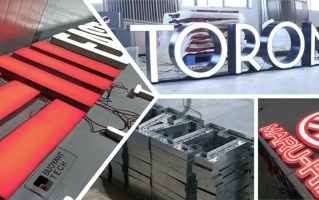
For our signage manufacturers, 3D design drawings are even more of a "treasure". In the past, if we looked at two-dimensional processing drawings, some complex special-shaped structures or multi-layer combination signs would have required a master craftsman to ponder for a long time. Now that we have a 3D drawing, we can directly preview the finished product shape, and even import it into CNC equipment. Precise cutting and bending , greatly reducing trial and error costs and material waste. When reporting to customers, a dynamic 3D display video is more convincing than a bunch of static drawings and can intuitively reflect our craftsmanship.
Having said that, 3D design drawings are not a panacea. They are more expensive to produce and require personnel and hardware. For some very simple signage projects, they may indeed be a bit "killing a chicken with a knife". No matter how realistic it is, it is still a simulation. Field investigation and on-site experience It is still irreplaceable. The light and materials in the model will always be slightly different from the real world. Its best positioning should be as a "powerful auxiliary tool" rather than replacing everything.
The 3D design of road markings is pushing our industry from "paper talk" to the "immersive" stage. It makes the design more accurate, the communication smoother, and the construction more efficient. Although there are still cost and technical barriers on the road to popularization, I think this trend from "flat" to "three-dimensional" is unstoppable. Maybe combined with AR (augmented reality) technology, we can directly see the effect of virtual signs superimposed on the real scene through glasses at the scene. That would be really cool! In this industry, there are always new things to learn, right?