Recently I visited many New Era Civilization Practice Centers and discovered a very interesting phenomenon.: Signs in many places are still stuck in the stage of "hanging on the wall with red letters on a white background." That's not to say that this doesn't work, but I always feel that something is missing. What era do you think it is now? Our practice center is originally a frontier for spreading new ideas, leading new trends, and serving the people. Doesn't the "face" at the door also need to be a little new and attractive?
So today, let’s not talk about those commonplace materials and processes, but just talk about them. 3D design of the signage of the New Era Civilization Practice Center , why does it have to be 3D? It's not just for showing off skills, there's a lot of knowledge here.
3D design can instantly change the "sense of distance" into a "sense of intimacy".
.jpg "新时代文明实践中心标牌,用3D设计玩出立体感和温度感")
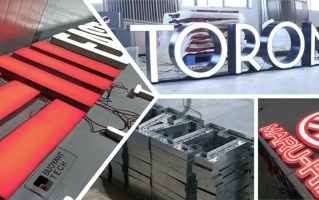
Think about it, traditional flat signs, no matter how beautiful they are, are just "lying" there, separated from people by one layer. However, 3D design, through layers, light and shadow, and three-dimensional shapes, suddenly makes the signs "stand up", with volume and a sense of space. The core words "New Era Civilization Practice Center" can be raised with slightly thick three-dimensional characters, and the bottom layer is matched with some relief patterns - it can be cloud patterns that symbolize harmony, or metaphors. The dedicated wheat ears, or the outline of the landscape that represents the local characteristics. When the sun shines, the light and shadow are scattered. The texture feels very solid and weighty when viewed from a distance. When viewed closer, the details are rich and intriguing. It is like a person. Only with outlines and shadows can he appear real and touchable. This three-dimensional presentation invisibly eliminates the serious barriers often found in official places, making people feel that, well, this place is "alive" and welcomes me to walk in.
3D is an excellent canvas for telling “local stories”.
The new era civilization practice in every place must be rooted in the local soil. How can your signage design be the same? 3D design provides huge creative space here. In a fishing port town, can the overall shape of the sign be designed into the shape of an abstract wave holding up a sailboat, with the words "Practice Center" engraved on the sail? In areas with profound red cultural heritage, can fluttering flag elements and three-dimensional characters be cleverly integrated? In areas inhabited by ethnic minorities, can the characteristic totem decorations be interpreted in a three-dimensional manner and surrounded by text?
This kind of three-dimensional narrative is much more powerful than simply posting a few photos or writing a few slogans. It makes the locals feel a sense of belonging - "Look, this is our own thing."” ; Let outsiders have something to remember when they see it - "Oh, this place is a little different." The functions and concepts of the practice center are conveyed unconsciously through this three-dimensional language full of regional characteristics. This is much better than blunt propaganda.
.jpg "新时代文明实践中心标牌,用3D设计玩出立体感和温度感")
3D design can cleverly integrate functions to achieve both "appearance" and "practicality".
Don’t think that 3D is just a showpiece. Good design always serves function. In addition to logos, signage of the New Era Civilization Practice Center often also has functions such as guidance, publicity, and information disclosure. 3D design can organically integrate these.
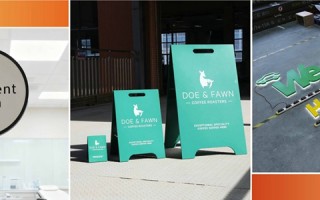
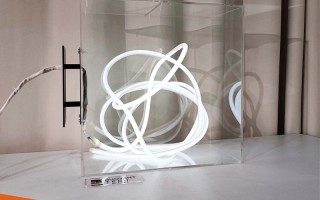
The name of the subject uses bold three-dimensional characters to ensure long-distance recognition. Some small three-dimensional information boards can be extended next to it to publish event notices, volunteer style, theoretical quotes, etc. These boards are designed with high and low levels, with clear priorities, and the information is clear at a glance without appearing cluttered or even confusing. Finally, the QR code can be made into a slightly raised three-dimensional small icon to guide people to scan the code and pay attention to more news. For another example, in the signage design of the entrance sequence, 3D modeling is used combined with lighting. It is a sculpture-like art body during the day and becomes a warm guiding light at night, exuding the affinity of the place 24 hours a day.
When playing 3D design, you must avoid several "pits".
.jpg "新时代文明实践中心标牌,用3D设计玩出立体感和温度感")
First, Avoid excessive complexity , The three-dimensional effect is not about stacking elements, nor is it complicated for the sake of complexity. The shape must be concise and powerful, with clear meaning. Too many tedious details will not only increase the production cost, be easily damaged, but also be visually tiring, but lose the focus. Good 3D design is often done by subtraction, using the most refined modeling language to express the richest connotation.
second, Avoid being separated from the environment , a sign is not an isolated work of art, it must grow in the environment in which it is located. Before designing, you must thoroughly understand the overall style of the practice center building, the spatial scale of the square, and even the surrounding green vegetation. A modern three-dimensional metal sign will definitely be out of place in front of an antique building. Design is about "dialogue". The sign must have a harmonious dialogue with the building and the environment.
third, Don’t ignore craftsmanship , no matter how good the 3D design drawing is, its implementation depends on solid craftsmanship. What kind of materials should be selected (metal, acrylic, composite materials? ), how to achieve precise cutting, bending, welding, and polishing, whether the surface treatment is painted, fluorocarbon sprayed, or antiqued, how to make the lighting even and soft... every link tests the skill of the producer. During the design stage, we must communicate closely with the producer to ensure that the idea can be perfectly realized and durable.
In the final analysis, when designing 3D signage for the New Era Civilization Practice Center, the core idea is just one: Make it "alive", with warmth, stories, and interaction. It is no longer a cold sign, but a three-dimensional declaration of the spiritual temperament of the entire practice center, and an emotional link connecting the institution and the masses. When people are attracted by a design sign, stop to watch, and even take photos to share, the spread of the new era's civilizational concepts has actually begun quietly.
The money spent on such a thoughtful and warm "facade" is worth it, because what it conveys is a kind of attention, a kind of intention, and an aesthetic and attitude towards the new era. Do you think this is the truth?