Have you also had such an experience? Walking into an unfamiliar scenic spot, holding a map in your hand and looking around, but you are still confused by the instructions: "Go left for the bathroom for 300 meters and then turn right"? Flat maps and stereotyped arrow signs sometimes make people feel that they are not consistent with the actual space. In the past few years, we have traveled to many places and discovered an interesting trend.: More and more scenic spots are beginning to think about "erecting" signboards. Yes, that's what they say. 3D scenic spot signage , I’m not going to talk nonsense today, let’s break it down and talk about how to look at the design drawing of this thing, and what little ideas are hidden behind it to make the tourist experience soar.
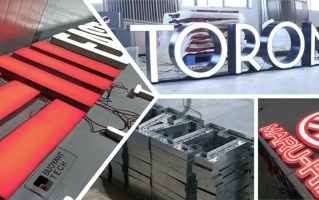
First of all, you must understand that 3D signage is not just for "looking good" or "showing off skills", its core is just one word: Dimensionality reduction strike , how to understand? The world we see with our human eyes is inherently three-dimensional, with distance, height, front and back. Traditional flat signboards forcibly compress three-dimensional spatial information onto a two-dimensional plane, requiring our brains to "decode" and "imagine", while 3D Signs are like using three-dimensional models to directly "restore" spatial relationships to you. The undulating mountains, winding roads, and scattered architectural models on the design are not just random clay figures. They are precise miniatures of the real scenic environment.
When looking at a design drawing of a 3D sign, what should you focus on? I think you have to keep an eye on it the first time you see it. “spatial narrative ability” , a good design drawing is definitely not just a matter of piling up a few architectural models. It will be like a considerate guide, using the height, orientation, and color contrast of the three-dimensional model to tell you silently.: “Hi, the main peak is here. It’s relatively high and the road is a bit steep. ; The plank road by the lake is there, relatively gentle and with good scenery. ; The toilets and service center are right behind you, just turn around and walk a few steps. ” Through its three-dimensional layout, it instantly establishes your sense of orientation and overall view of space. The anxiety of "where am I, where am I going, and how to get there" is relieved by most of it at once.
.jpg "景区导视新玩法!3D指示标牌设计图,让你的路线立起来")
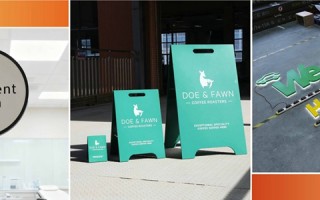
Let’s talk about details. Those seemingly small treatments on the design drawings often determine the practicality and texture after landing. Grasp the scale This is particularly critical. The model is too large, occupying the information space, and appears bloated. ; The model is too small, and the details cannot be seen clearly, and the meaning of three-dimensional indication is lost. A good design drawing will find a golden balance between clarity and overall feeling, and Material labeling , this is directly related to the durability and atmosphere of the physical objects produced in the later period. Is it using environmentally friendly resin that imitates wood grain to echo the natural scenic spots? Or use a combination of metal and acrylic to create a modern look? It will be clear on the design drawings. We have seen some cases where the lighting simulation at different times was considered during the design drawing stage to ensure that the key information on the signage will not be severely reflected or shadowed under soft light in the morning and oblique light in the afternoon. Visitors can feel this care.
.jpg "景区导视新玩法!3D指示标牌设计图,让你的路线立起来")
It is not without its challenges. No matter how beautiful the design is, you still have to consider The muscles and bones of making and landing , how to ensure the stability of the three-dimensional structure, especially when it needs to withstand wind and rain outdoors? Will the production cost and cycle time get out of control due to complex modeling? Is it convenient for later maintenance (such as replacing a small model)? These practical problems will be repeatedly considered in the design drawing stage. We have seen some excellent design drawings, which are accompanied by structural decomposition diagrams, installation node diagrams, and even previews of the assembly methods of different modules. This is to solve the problem on the drawings.
Finally, let’s talk about the “unexpected joy” it brings. A well-designed 3D scenic spot sign often becomes a Check-in point , it is no longer a cold tool, but a landscape piece full of design and interactivity. Tourists like to point around it, find their own location, plan routes, and even take photos to share. For the scenic spot, this virtually increases the stay time and spreads the highlights. Its existence silently conveys a message.: This scenic spot cares about your experience and is willing to put in effort to make your experience more understandable and easier.
Next time you see a three-dimensional sign in a scenic spot that makes your eyes light up and instantly understand the space, you might as well pay more attention to its design. Every undulation and mark may contain the designers and scenic spot operators’ thoughtful consideration of the tourists’ journey, from the detailed 3D design drawings to the final objects standing at the intersection. What we have crossed is not only the distance from drawings to products, but also a transformation from "management thinking" to "service thinking". After all, scenic spots that make people get lost each have their own disadvantages, while scenic spots that make people feel clear, convenient and surprising always pay attention to the details. What is established is not just a brand, but also a better tourist experience.
.jpg "景区导视新玩法!3D指示标牌设计图,让你的路线立起来")