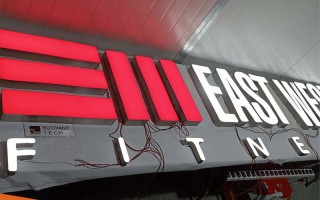
Have you ever encountered this situation - holding a brand new chrome acrylic sign in your hand, with a cool texture and a dazzling mirror effect, but you can't find when it was "born" after turning it over and over? When customers ask, or when they manage their own inventory, they are confused. Don’t worry, this is too common. The production date of acrylic chrome-plated signs is often not clearly printed like food packaging. It is more like an “invisible password” hidden in some inconspicuous corners. Let’s put aside those complicated industry terms and talk in vernacular about how to “see through” it like an old friend.
First of all, you have to understand why the production date is so "shy". The main purpose of an acrylic chrome sign is to be good-looking and durable. The front should be as bright as a mirror, and the lines should be clear and neat. The manufacturer would like to hide all the things that affect the appearance. "Identity information" such as production date and batch number are usually not engraved on the front of the sign. That would be equivalent to sticking a barcode on the face of a beautiful woman, which is too disgraceful. They are usually arranged on Back, side, or non-visual focus areas such as base and buckles .
.jpg "亚克力镀铬标牌上的隐形密码,教你一眼看懂生产日期")
In what specific form will it appear? There are several common ones, you can check them out:
Laser marked "mysterious number string"” This is currently the most mainstream method. Use a laser to mark a string of characters on the back or edge of the sign. This string of characters may look a bit messy, such as "20240315A3" or "24128-BLK". The date information is hidden here, and the numbers in front represent the date. “20240315" is likely to be March 15, 2024. Some manufacturers also use the abbreviation, 240315". The letters and following numbers may be batch, production line numbers or color codes. If you see a string of codes starting with year, month and day, first suspect that it is the production date.
Silk screen or inkjet coding "little dots"” In some non-mirror back areas, ink may be used for screen printing or inkjet coding. This kind of mark is sometimes not so strong and may feel a little bumpy to the touch, or it may fade if rubbed a little. The information content is similar to laser marking. It is also a string of combination codes. You need to carefully identify whether the number part conforms to the date logic.
.jpg "亚克力镀铬标牌上的隐形密码,教你一眼看懂生产日期")
Sticker Label's "Death Confession"” Some manufacturers will put a self-adhesive label on or on the back of the protective film when it leaves the factory. This label is like a "temporary ID card" for the sign. In addition to the date, it also contains information about specifications, materials, quality inspectors, etc. But be careful! This sticker was probably thrown away when the customer removed the protective film, or it fell off on its own over time. If you can still see the sticker, the information will be clear at a glance. ; If it's gone, you have to look for other traces.
Mold number and date code "two-in-one"” For injection molded or die-cast acrylic chrome plate bases or frames, the date information is sometimes together with the mold number, and you may find an engraving like "MFG-23-12" on the very inconspicuous inside. “"MFG" is the abbreviation of manufacturing, and the year and month (December 23) following it are the production time.
What should I do if I really can’t find it?
.jpg "亚克力镀铬标牌上的隐形密码,教你一眼看懂生产日期")
Don’t get too carried away. Some signs produced in small batches or urgent orders may not have dates, or the records in the system may be more reliable than the physical objects. In this case, you can:
Ask the source: The most direct way is to contact your supplier or manufacturer and provide photos of the label (especially any possible coding) and purchase contract number. They can find the most accurate production records from the system.
Look at "Condition"”: Although it is not absolute, it can help to judge. Brand-new products with intact protective film and no signs of scratches and oxidation on the chrome plating are generally newer products. If there are slight traces of use on the edges or the protective film is yellowed, it may have been stored for a longer time. However, this method can only make a rough guess and is not accurate.
develop good habits: As a user or purchaser, the best way is to communicate with the manufacturer when placing an order and ask them to Specify the location (such as the unified corner on the back) Marking a clear production date code will be of great benefit to your future quality traceability and inventory rotation.
A few final words, understanding the production date is not just for "knowing your age", it is also connected to Quality traceability ——In case there is a small problem with the coating later, you will know which batch it is from so that it can be easily handled. ; connected Inventory management ——First in first out to avoid material aging ; More connected Customer trust ——You can clearly tell the "origin" of the product and appear professional and reliable.
Next time you get a shiny acrylic chrome sign, don’t just admire its appearance. Turn it over, find a corner, and take a closer look. Those seemingly cold numbers and letters are actually its unique “birth certificate.” Once you find it, your story with this sign will truly begin.
I hope these bits and pieces of experience can help you clear up the confusion. If you are still unsure about any specific situation, you can come back to chat at any time and let's figure it out together.