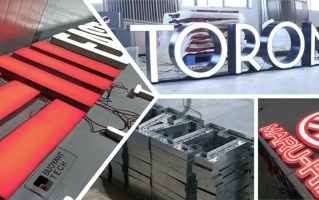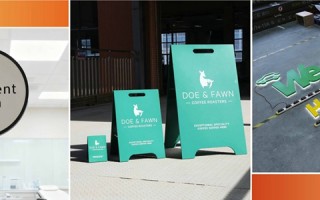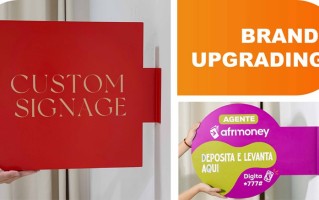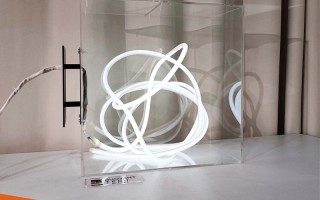
When it comes to signs, many people may think that they are just signs and house numbers on the street, nothing special. But if you pay a little attention, you will find that today’s signs are no longer as simple as a flat plate and a few words. Especially in commercial spaces, urban landscapes, and high-end real estate, 3D sculpture signs that are full of three-dimensionality, design, and even artistic flavor are becoming more and more common. They are not only guidance tools, but also part of the environment, and even the "face" of a brand.
.jpg "驰诚标识,从3D雕塑到标牌,一家源头厂家的深度解析")
Let’s not talk about the fictitious stuff, but let’s actually dig into it. What is going on with companies like “Chicheng Logo” that claim to be the “source manufacturer of 3D sculptures”? Are they playing with concepts, or do they really have hard power? As an editor who often needs to think about signage design and production, I feel it is necessary to walk through this chain for everyone.
You have to figure out what a "source manufacturer" is.
These four words are almost overused now, but in the manufacturing industry, they still have specific meanings. For 3D sculpture logos, the "source" means that it is not just an assembly or secondary processing role. It has to be deeply involved starting from the earliest design ideas. ; In terms of materials, we have stable and reliable purchasing channels and even independent processing capabilities (such as specific metal profiles, polymer plates, casting raw materials) ; In terms of production technology, we master a series of core processes from modeling, CNC cutting/engraving, forging, casting, welding, grinding to surface treatment (such as baking paint, electroplating, antique distressing).
In other words, if you have a fantastic design and throw it to a pure "processing factory", he may directly tell you "it can't be done", but for a real source manufacturer, his engineers or technical consultants will work with you to think about it.: “Your arc shape can be achieved by forging a stainless steel plate and then welding and polishing it, but the cost is high. ; If cast copper is used, the details will be richer, but it will be heavy and the structure must be considered during installation... We have several plans here, take a look. ” This ability to solve problems from the source of materials and processes is the key.
.jpg "驰诚标识,从3D雕塑到标牌,一家源头厂家的深度解析")
What are the difficulties in making 3D sculpture logos?
It’s definitely not just as simple as buying a 3D printer (that’s another field). Common 3D sculpture logos are made of stainless steel, copper, aluminum, resin, stone, etc. There are at least three levels of difficulty.:
From "picture" to "type"”: The beautiful 3D model drawn by the designer on the computer needs to be transformed into an actual producible path, which requires professional disassembly and mold splitting design. A complex sculpture logo may be divided into dozens of parts to be produced separately and then precisely assembled. How to distinguish them reasonably? How to ensure tight fit and smooth lines after assembly? This is very experienced.
The game of craftsmanship and details: To make a metal three-dimensional flying bird logo, it is forged with thin sheet metal to create a light shape, but the feather details may need to be carved by hand. ; If precision casting is used, the details can be very perfect, but the molding cost is high, and large-sized castings are prone to defects. Should the surface be mirror polished or brushed? Do you want to make it look bronze or keep the original color of stainless steel? Each choice is associated with different process lines and costs.
Balance between structure and safety: A large outdoor 3D sign must first be an "engineering part". How to calculate the wind load? How to design the internal skeleton? How to install embedded parts? It is necessary to ensure visual beauty (often requiring the structural parts to be hidden), but also to ensure that it remains standing for ten or eight years, with safety first. This cannot be accomplished without solid experience in steel structure design and construction.
You see, this job is a typical fusion of "technology + art", and it crosses boundaries very well.
For manufacturers like "Chicheng Logo", where should their value points lie?
.jpg "驰诚标识,从3D雕塑到标牌,一家源头厂家的深度解析")
According to my observation of this industry, if a company can focus on the field of 3D sculpture logos for a long time and establish itself as a "source manufacturer", it should at least have two skills in the following aspects::
Design transformation ability: There must be a team that understands both art design and craftsmanship. It can "translate" the designer's creativity and implement it into an executable and cost-controllable production plan. This is not a simple "processing of drawings", but "co-creation".
Comprehensive process integration: There cannot be only one or two pieces of equipment in the factory. It is likely to include laser cutting, waterjet cutting, CNC forging, precision casting, argon arc welding, manual forging/engraving, automated spraying lines, chemical coloring and other types of equipment and technical work. It is like a general hospital. Although it also has specialized expertise, it has basic plans to deal with various "diseases" (different process requirements).
Project management and control experience: From a small shopping mall logo sculpture to a large city-themed sculpture, the complexity of the project varies greatly. The source manufacturer needs to have the ability to control the entire process from in-depth design, material procurement, production organization, quality inspection, packaging and transportation to on-site installation guidance. If any link is missed, the final effect will be greatly reduced.
"Database for Materials and Surface Treatments"”: He has a keen grasp of the characteristics, durability and price fluctuations of various materials, and has dozens or even hundreds of surface treatment effects (such as stainless steel 8K mirror, titanium, black titanium, sandblasting ; Copper (titanium plating, antique green, gilt, etc.) has a rich sample library and mature technology, which can accurately achieve the "feel" the designer wants.
These are the "should have meaning" in an ideal state. When it comes to a certain company, you also need to see their cases (not renderings, but real photos and videos), see the workshop (equipment status, worker skills, on-site management), and see the reputation of the designers or Party A they have worked with.
For those of us who need content, there are many angles to explore the stories of such manufacturers.
They can talk about the most challenging 3D logo project they have ever done, what pitfalls they encountered during the process, and how they climbed out. They can show the picture record of the entire process from a sketch, to a computer model, to a clay draft/sample, to the production, assembly, and surface treatment of each component. Readers like this kind of "birth story". They can also learn about how many years different surface treatment processes can maintain without fading or deformation, helping readers establish basic quality judgment standards.
The signage industry may seem traditional, but it has been driven forward by new materials, new processes, and new aesthetics. 3D sculpture signage is one of the fascinating branches. It turns the cold indicating function into a space-shaping element with warmth and attitude.
Source manufacturers such as "Chicheng Logo" are actually "problem-solving experts" in this niche field. The meaning of their existence is to help designers and owners put those exciting ideas in the real world solidly, safely and beautifully. Next time you see an impressive three-dimensional logo, you might as well think more about the complex journey behind it from idea to implementation, and maybe you will have a better understanding of these "silent makers".
Every manufacturer says it is good, but whether it is really reliable or not depends on more eyes and more comparisons with cases. I hope this lengthy text can provide you with some useful perspectives when understanding 3D sculpture logos and their manufacturers. We will talk about other methods next time.